
The Fire Safety (Residential Evacuation Plans) Regulations 2025 – What They Mean for Property Managers
October 20, 2025Case Study: Opus Building – Premier Estates
February 9, 2026Why Fire Risk Assessments Are Essential for Your Business
When it comes to protecting your business, ensuring the safety of your employees, assets, and customers is a top priority. One of the most critical aspects of workplace safety is fire prevention. At iES Security, we understand the importance of proactive safety measures, which is why we offer comprehensive Fire Risk Assessments to help businesses identify potential hazards and implement effective strategies to reduce fire risks.
What is a Fire Risk Assessment?
A Fire Risk Assessment is a thorough evaluation of your property to identify potential fire hazards, assess risks, and provide recommendations to minimise those risks. This includes evaluating the building's layout, equipment, materials, and processes that could potentially contribute to fire hazards. A professional risk assessment will provide a clear, actionable plan to reduce fire risks and ensure compliance with safety regulations.
Why Do You Need a Fire Risk Assessment?
1. Legal Compliance
Under the Regulatory Reform (Fire Safety) Order 2005, all businesses are required by law to carry out regular fire risk assessments. These assessments help ensure that the necessary fire safety measures are in place and up to code. A failure to conduct an adequate fire risk assessment can lead to legal consequences, fines, or even business closure in extreme cases.
2. Protecting Lives and Property
The main goal of any fire risk assessment is to protect people—whether they are employees, customers, or visitors. By identifying fire hazards and assessing risks, we help ensure that your business has the right fire prevention and emergency procedures in place, ultimately saving lives.
Additionally, preventing fire hazards from developing can protect your property, equipment, and important documents from being destroyed or damaged in the event of a fire.
3. Insurance Requirements
Many insurance policies require businesses to have a current fire risk assessment to maintain adequate coverage. In some cases, insurers may deny claims if a business is found to be lacking a proper assessment or fire safety measures. Our fire risk assessments help businesses stay compliant with insurance requirements and ensure they’re fully covered in case of an emergency.
What’s Included in a Fire Risk Assessment?
- Identifying Fire Hazards: We review the property to identify potential sources of fire risks, including electrical faults, heating equipment, flammable materials, and more.
- Evaluating People at Risk: We assess who could be at risk in the event of a fire, including employees, customers, and vulnerable individuals such as people with disabilities or visitors unfamiliar with the building layout.
- Fire Prevention Measures: We evaluate your current fire prevention measures, such as fire alarms, sprinklers, extinguishers, and fire doors, and ensure they meet the necessary standards.
- Escape Routes and Emergency Plans: We check that your business has clear escape routes, proper signage, and emergency procedures in place. This ensures that people can quickly and safely evacuate the building in case of a fire.
- Recommendations for Improvement: Based on our findings, we provide tailored recommendations for improving your fire safety practices. This could include upgrading equipment, improving training for employees, or making changes to building layouts.
- Compliance Documentation: After the assessment, we provide a full report outlining the findings and steps taken to meet regulatory standards. This documentation can be used to demonstrate compliance to insurance companies, local authorities, or other relevant parties.
PCEP (Person-Centered Evacuation Plans) and PEEPs
While fire risk assessments are essential for identifying and mitigating fire hazards, Person-Centered Evacuation Plans (PCEPs) and PEEPs (Personal Emergency Evacuation Plans) are crucial for ensuring the safety of individuals who may need additional assistance in an emergency. These plans focus on the specific needs of individuals with mobility impairments, medical conditions, or other vulnerabilities that could make evacuation more difficult.
What is a PCEP or PEEP?
A Person-Centered Evacuation Plan (PCEP) or PEEP is a personalised plan created for individuals who may need extra support during an emergency evacuation. These plans are designed to ensure that all employees, visitors, or anyone on the premises can safely evacuate the building, no matter their personal needs or abilities.
PEEPs typically include details such as:
-
- Evacuation Assistance: Identifying what type of help is required (e.g., physical assistance, mobility aids, etc.).
- Evacuation Routes: Tailoring escape routes to accommodate specific needs (e.g., wheelchair-friendly paths).
- Staff Roles: Designating employees who will assist in the evacuation of individuals with mobility or sensory impairments.
- Communication Needs: For those with hearing or visual impairments, ensuring emergency alarms are audible or visible, or providing staff with alternative ways to alert them.
- Safe Refuge Areas: If individuals cannot evacuate immediately, identify safe areas where they can be temporarily sheltered until help arrives.
- Evacuation Assistance: Identifying what type of help is required (e.g., physical assistance, mobility aids, etc.).
Why are PCEPs and PEEPs Important?
- Ensures Equal Safety for All: It's important that all employees and visitors are accounted for during an emergency. PCEPs and PEEPs make sure that those who may be vulnerable receive the attention and assistance they need to evacuate safely.
- Meets Legal Requirements: Under the Equality Act 2010, employers are required to consider the safety needs of people with disabilities. A PEEP ensures that your business is not only compliant with fire safety regulations but also with disability and equality laws.
- Reduces Panic: Knowing that a well-structured evacuation plan is in place for those who need assistance helps reduce confusion and panic during an emergency, ensuring a smoother evacuation process.
- Protects Vulnerable Individuals: Employees or visitors with physical or cognitive impairments may not be able to evacuate as quickly or efficiently as others. PCEPs and PEEPs ensure that these individuals are given priority and appropriate support during an evacuation.
The details of PCEP/PEEP reports will be available for local fire and rescue service in accordance with current legislation.
General Evacuation Plans
In addition to person-centered plans, every business should have a General Evacuation Plan in place. This plan should be tailored to the specific risks and layout of your building and ensure that everyone—employees, customers, and other visitors—can evacuate quickly and safely.
Key components of a general evacuation plan include:
- Clearly Marked Escape Routes: Ensure that all escape routes are well-lit, unobstructed, and clearly marked with appropriate signage.
- Assembly Points: Identify safe, designated assembly points away from the building where everyone can gather after evacuation.
- Regular Drills: Conduct regular fire drills to ensure that all employees know what to do in the event of a fire and that they can execute the plan efficiently.
- Communication Plans: Ensure that there are clear procedures for communicating with emergency services and between staff members during an evacuation.
How iES Security Can Help
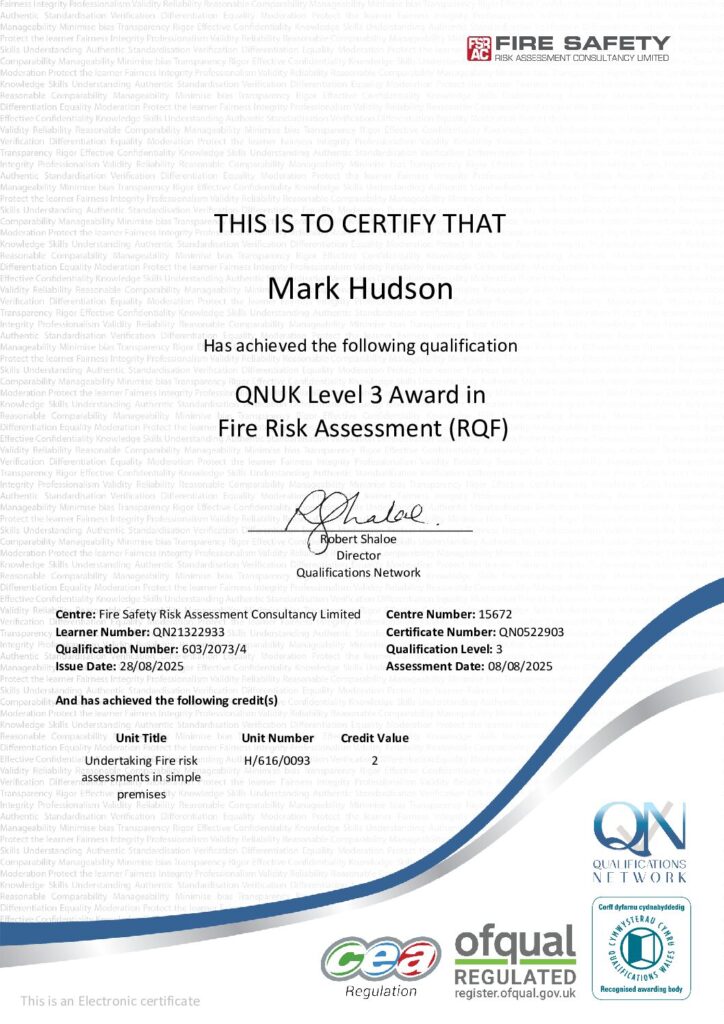
At iES Security, we utilise staff with years of experience providing assessments and producing professional reports. Our team of experts is dedicated to offering the highest level of service and ensuring your business meets all regulatory requirements. Included in our team of experts, with over 30 years of experience in site risk assessments and senior roles in law enforcement, Mark Hudson monitors and reviews our reports to ensure consistency across the board.
Whether you own a small office, a large industrial site, or a public-facing retail store, we can tailor a fire risk assessment and fire safety plan to suit your needs. We also offer ongoing fire safety training for your employees to ensure they understand how to act in the event of a fire.
Contact iES Security Today
Don’t wait for an emergency to highlight potential risks—act now to protect your business. Contact iES Security to schedule a comprehensive Fire Risk Assessment today. Let us help you create a safe, secure environment for your employees, clients, and property.
Is your estate ready for the Fire Safety (Residential Evacuation Plans) Regulations?
Our experts can provide a free site compliance audit and tailored proposal to help you prepare
📞 0333 3055 328
✉️ info@ies-security.com
🌐www.ies-security.com